On a recycling pelletizing line, the screen changer is where your material's contamination turns into a running cost. Paper labels, aluminium, sand, wood fibre and unmelted particles all end up on the screen. Choose the wrong type and the line stops every hour for a screen change, or the pellets carry black specks that your customer rejects. This guide explains the main screen changer types, how to match them to your material, and what we need from you to configure the filtration on a Jiangsu PURUI line.
What a screen changer does, and why recycled material is different
A screen changer holds a metal mesh (the screen pack) in the melt flow between the extruder and the die. It removes solid contamination before the melt is pelletized. As the screen fills, melt pressure in front of it rises, and at some point the screen must be changed or cleaned.
With virgin resin, a screen may run for days. With post-consumer film, woven bags or bottle flakes, it can block within minutes to hours, depending on how clean the washed material is. So for recycled material the real questions are: how often will the screen block, and what happens to production and pellet quality while it is changed?
The main types
Manual or hydraulic plate (slide-plate) changer. A plate with one or two screen positions is pushed across the melt channel. Simple, compact and low cost. Each change causes a short pressure and flow interruption. Suitable for fairly clean, washed material and a low change frequency.
Double-piston (continuous) changer. Two or more pistons, each with its own screen cavity. One cavity is changed while the others keep the melt flowing, so the line does not need to stop. A common choice for washed film and regrind where screens are changed several times per shift.
Backflush (self-cleaning) changer. A piston-type changer that pushes a small amount of clean melt backwards through a dirty screen to flush it, so each screen can be reused several times before replacement. It reduces screen consumption and operator work, at the cost of a small melt loss with each flush.
Continuous or automatic self-cleaning filters. For heavily contaminated streams, such as film with paper labels, continuous belt filters or scraper-type melt filters remove contamination without regular manual changes. They cost more, but on dirty input they can be the difference between a line that runs and one that does not.
Laser filter by Jiangsu PURUI
For heavily contaminated post-industrial and post-consumer waste, Jiangsu PURUI pelletizing lines can be supplied with a fully automatic laser filter system. It is built for solid contamination such as wood, paper and stone. A pressure monitoring system watches the melt pressure, and the filter plate cleaning speed can be set to automatic or manual. Contamination is scraped off and discharged automatically, so the line does not stop for screen changes.
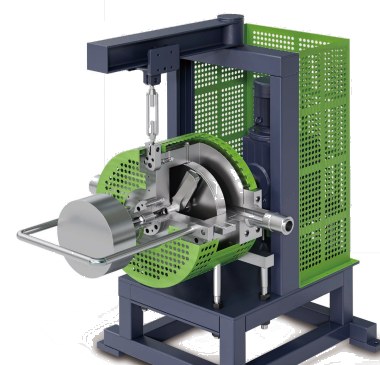
Two-stage laser filtration in one unit. For material with a lot of contamination, the integrated two-stage laser filter does coarse filtration and fine filtration in one pass. It runs stably, discharges contamination efficiently and keeps material waste to a minimum. The disc can also be set up for fine filtration only.
| Model | FLS-400 | FLS-500 | FLD-400 | FLD-500 |
|---|---|---|---|---|
| Filter discs | 1 × Ø400 mm | 1 × Ø500 mm | 2 × Ø400 mm | 2 × Ø500 mm |
| Filtration area (cm²) | 1,100 | 1,700 | 1,100 × 2 | 1,700 × 2 |
| Capacity (kg/h) | 200–300 | 400–500 | 600–800 | 1,000–1,500 |
| Filtration fineness | 250 – 106 μm (60 – 150 mesh) | |||
Single-disc (FLS) and double-disc (FLD) models. Data from the Jiangsu PURUI catalogue; actual capacity depends on the material and its contamination.
Which filtration fits your line is confirmed with the factory for each project, based on your material and output.
Single-stage or two-stage filtration?
On a two-stage line, filtration can be split. The first extruder stage removes coarse contamination; the second stage, after vacuum degassing, does the fine filtration. Each screen then blocks less often, and the fine screen is protected from large particles.
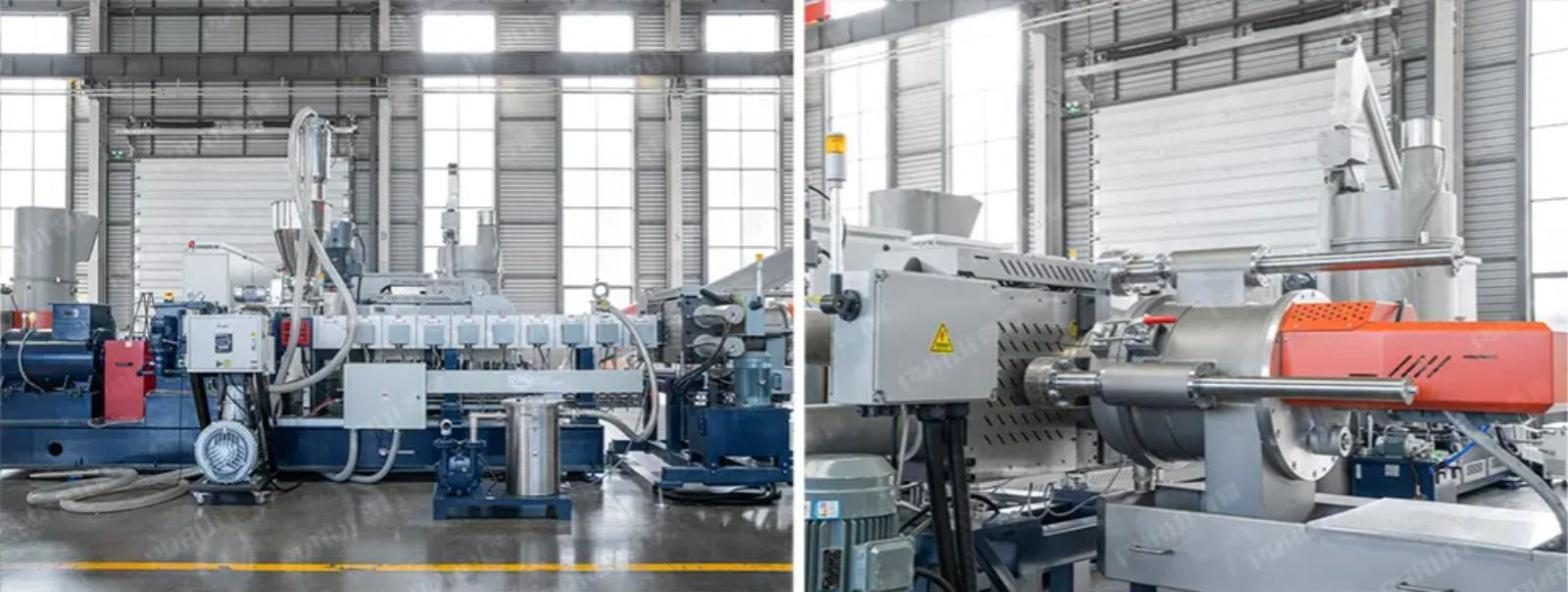
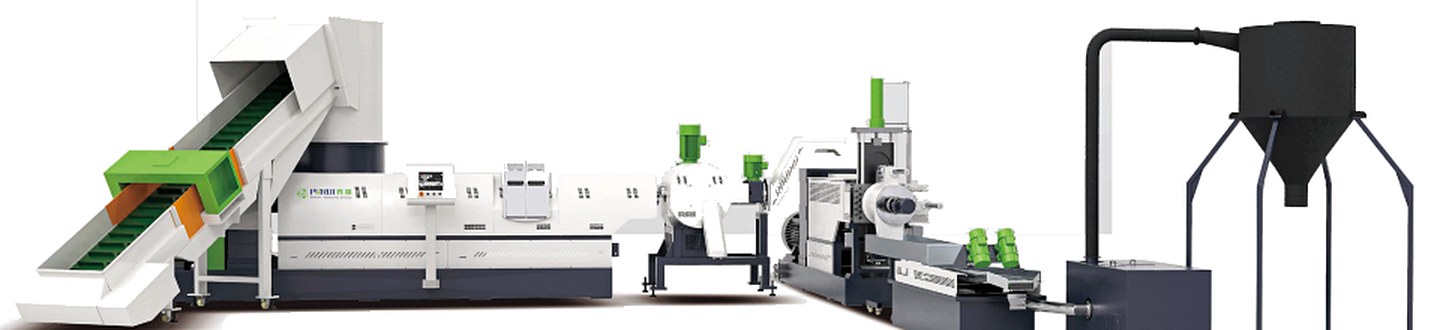
In our HDPE milk bottle flakes project (China, March 2026), the first stage removed coarse contamination and the second stage used a hydraulic screen changer down to 80–100 μm, giving white or ivory pellets for blow-moulded bottles. See the case on the recycling machines page. Washed film flakes are pelletized on Jiangsu PURUI SJ two-stage lines in the same way; large lines add a laser filter.
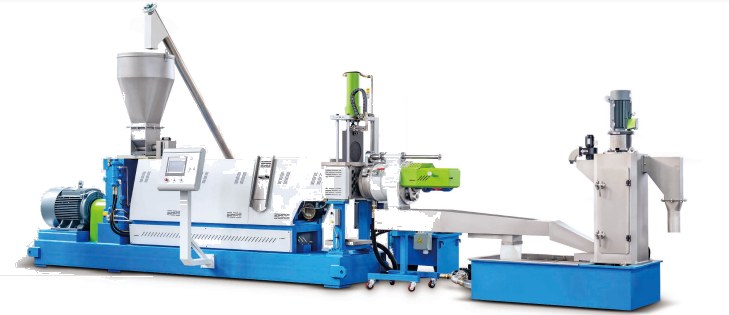
Rigid pelletizing lines for buckets, small hollow bottles, milk bottles and ABS, PC and PP rigid material are available as single-stage or two-stage lines.
How to match the screen changer to your material
- Contamination level after washing. The cleaner the input, the simpler the changer can be. Better washing often saves more than a more expensive filter.
- Contamination type. Hard particles (sand, metal) and soft, fibrous contaminants (paper, wood) behave differently on a screen. Paper-rich film is the classic case for self-cleaning filtration.
- Target product. Film and injection grades, and especially anything for bottles, need finer filtration than pellets for pipes, crates or black compounds.
- Output. Higher kg/h means more contamination reaching the screen every hour, so screen area and change frequency must be sized together.
- Operator time and screen cost. Count how many screen changes per shift your team can realistically handle.
For the extruder itself, ML with cutter-compactor for clean film scrap, or SJ for washed film flakes, rigid flakes and regrind, see the guide ML or SJ pelletizing line.
What to send for a quotation
- Material type and form, for example LDPE agricultural film, PP woven bags or HDPE bottle flakes
- Photos of the material before and after washing
- Main contaminants (paper labels, aluminium, sand, wood, other polymers) and an estimate of how much
- Target output in kg/h
- Final product and the pellet quality you need (mesh or micron level, if you have one)
- How often you can accept a screen change, and whether the line must run without stopping
- Your current line, if you are upgrading an existing filter
Plastic recycling machines by Jiangsu PURUI, manufacturing in Jiangsu since 2006. See the pelletizing lines on the recycling machines page.
Tell us your material and target output
Send the material type, output in kg/h and final product. We reply within 24 hours with a configuration and price range.
- WhatsApp: +86 130 1820 8126
- Email: [email protected]
- Email: [email protected]